Physical Address
304 North Cardinal St.
Dorchester Center, MA 02124
Physical Address
304 North Cardinal St.
Dorchester Center, MA 02124

Bollywood news, reviews, interviews & fashion
Bollywood news, reviews, interviews & fashion
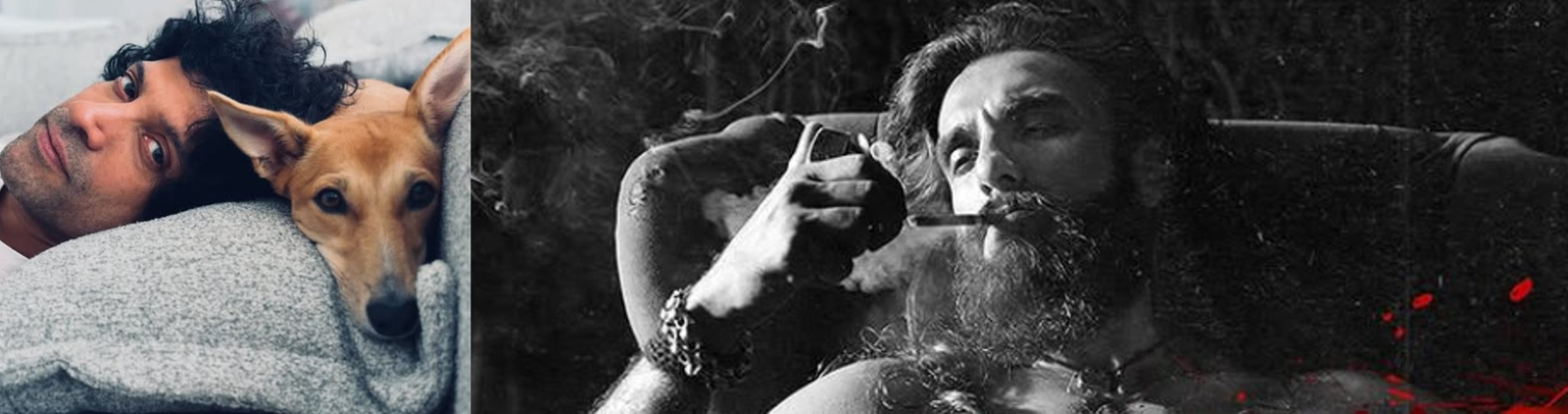
The headlines scream that Ranveer Singh has been “banned” from the film industry. Workers’ body FWICE has issued a non‑cooperation directive, producers are spooked, and social media has already decided who’s the villain. But step away from the noise, and the whole episode starts to look less like justice for workers and more like another example of how Bollywood loves public trials when it’s convenient – and forgets due process when it isn’t.
This isn’t just a Ranveer issue. It’s a test case: who really controls Bollywood – contracts and courts, or committees and callers‑of‑boycott?
Let’s be clear: walking out of a film late in the day is not a small thing. It messes up schedules, wastes money, and hits the people who can least afford it – the crew living gig to gig. If Ranveer exited Don 3 just weeks before shoot after massive prep and spend, that’s a serious professional misstep, and it’s fair for producers and workers to be angry.
But here’s the uncomfortable truth: this kind of chaos is not new. Stars have walked out of films, films have been shelved overnight, cheques have bounced, and workers have been stranded on location for decades. The industry usually handles it quietly – a settlement here, a compromise there, some bad blood, a few blinds, and then everyone moves on.
Why, then, has this case turned into a public “ban” drama? Because it involves a mega franchise, a big star, and a producer with strong institutional relationships. Suddenly a pattern that was always brushed under the carpet is being punished through a spectacle.
If you want to fix systemic problems, you don’t start with a headline‑friendly hanging. You start with clear, consistent rules that apply to everyone – not one public example.
On paper, FWICE is doing what a workers’ body is supposed to do: backing its members when they feel cheated. If hundreds of crew members lined up their time and income around Don 3 and saw it all evaporate because of last‑minute star politics, someone has to speak for them.
But the tool FWICE has chosen – a blanket non‑cooperation directive against one actor – is where the line blurs. A union defending workers is essential. A union deciding who can and cannot work in the entire industry crosses into dangerous territory. Today it’s Ranveer. Tomorrow it could be any actor, director, or even technician who falls foul of the “system”.
Instead of pushing for transparent compensation mechanisms, insurance, and better contracts that automatically protect crew when a project collapses, we are watching a public naming‑and‑shaming exercise. That might feel satisfying in the short term, but it doesn’t fix the real structural issues. It just proves that if the right people are angry at you, your career can be partially frozen by committee.
On the legal side, the situation is almost boring. A workers’ body is not a court. It cannot legally cancel anyone’s right to work. Contracts are enforced in legal forums, not press notes. Any court looking at this would ask basic questions: what does the contract say, what damages are owed, what’s the evidence, what’s the jurisdiction?
But Bollywood doesn’t run only on law. It runs on relationships, whispers, and signals. A non‑cooperation directive is a signal: “If you work with this person, you’re taking a side.” Most producers don’t want to be in the middle of a war. They want smooth shoots and safe investments. So even if the “ban” has no legal teeth, it can still bite hard in the short term.
That gap – between what is legally allowed and what is practically possible – is where the real power lies. And right now, that power is being wielded not by a court, but by a federation that has decided to make one actor the cautionary tale for an entire ecosystem.
There’s another angle the industry is conveniently ignoring. If Ranveer is being publicly punished for allegedly causing massive loss and disruption, where is this energy when:
You cannot build an ecosystem of casual chaos and then act shocked when a star behaves casually too. If everyone is serious about accountability, it must run both ways. There should be:
Until that happens, turning one actor into a poster boy of “justice” looks less like fairness and more like selective outrage.
In the short term, this episode will definitely hurt Ranveer. Big‑scale domestic shoots will become harder. Some producers will quietly step back rather than inherit someone else’s war. A few projects will go on pause until there’s clarity. His image, especially in trade circles, will take a hit – not so much with fans, but with the people who sign cheques.
But long term? Bollywood has a very short memory when films work. If his next few releases connect with the audience, the same ecosystem that is cautious today will gladly cash in on his star power tomorrow. Controversy hurts, but box office heals faster than any press note.
The real danger isn’t that Ranveer’s career ends here. The real danger is the precedent this sets: that instead of strengthening contracts and legal systems, the industry is comfortable letting federations and associations decide who is “in” and who is “out” in any given season.
Ranveer may genuinely have handled Don 3 unprofessionally – that’s something only the contract and evidence can fully reveal. If he is liable, he should pay up, apologise, or face legal consequences. That’s what accountability looks like in a grown‑up industry.
But using a quasi‑ban as a pressure tactic is lazy problem‑solving. It turns a complex issue of contracts, risk, and worker protection into a simple villain storyline: this star is the problem. It’s emotionally satisfying. It’s also intellectually dishonest.
If Bollywood wants fewer Don‑style messes, it needs:
Until then, every time we cheer an “industry ban”, we’re also cheering a system that prefers scapegoats over serious reform.