Physical Address
304 North Cardinal St.
Dorchester Center, MA 02124
Physical Address
304 North Cardinal St.
Dorchester Center, MA 02124

Bollywood news, reviews, interviews & fashion
Bollywood news, reviews, interviews & fashion
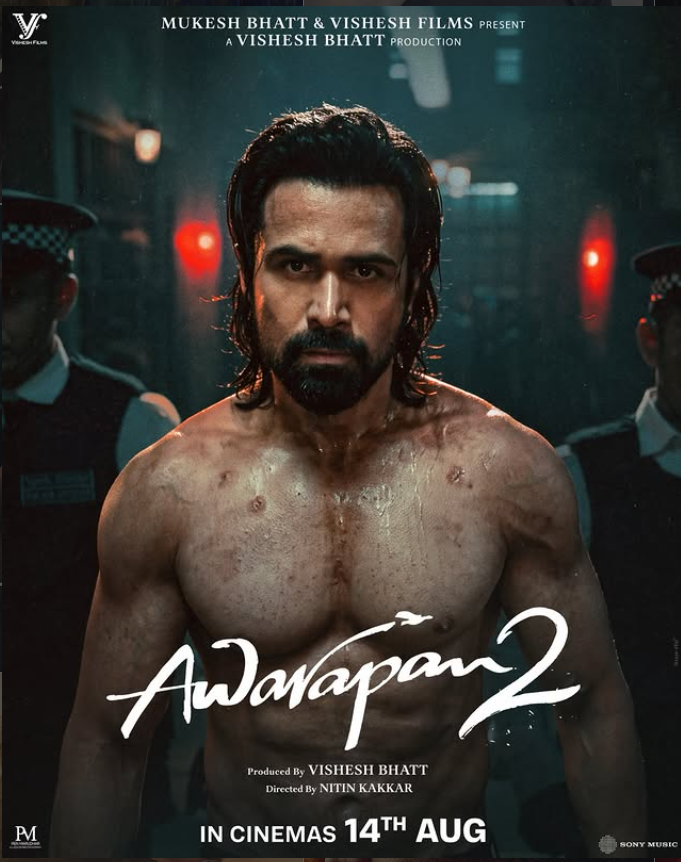
After years of delivering memorable performances without consistently receiving superstar-level box-office success, Emraan Hashmi has finally achieved a major theatrical breakthrough with Awarapan 2. Here's why his biggest career opener could mark the beginning of a new phase in his career.
There is something almost poetic about Emraan Hashmi’s biggest box-office breakthrough arriving with Shivam Pandit, a character he first played nearly two decades ago. When Awarapan arrived in 2007, it was not a commercial success. Yet the film refused to disappear. Its music lived on, its emotional intensity found a second life on television and digital platforms, and Hashmi’s portrayal of a wounded, morally conflicted man gradually became one of the most remembered performances of his career. Nineteen years later, the same character has returned — and this time the audience has turned up.
Awarapan 2, released on August 14, 2026, has delivered the biggest opening of Emraan Hashmi’s career. The film collected around ₹22 crore net in India on its opening day and reached roughly ₹55.75 crore net after two days, according to current trade reports. Its worldwide gross was estimated at around ₹72.9 crore after Day 2. Whatever the final lifetime number turns out to be, the significance of the moment is already clear. Emraan Hashmi is finally experiencing the kind of box-office adulation that his career has been threatening to produce for more than two decades. And frankly, it is long overdue.
Few actors in contemporary Hindi cinema have had a career as paradoxical as Emraan Hashmi’s. He has been a star without always being treated like one. He has delivered hits, super-hits and enormously popular songs. He has carried films almost entirely on his shoulders. He has created characters that audiences remember years later. He has worked with filmmakers as different as Mohit Suri, Milan Luthria, Dibakar Banerjee and Kunal Deshmukh. He has played everything from a serial seducer and conman to a gangster, politician, sports personality, middle-class lover, morally compromised protagonist and outright villain.
And yet, for a considerable part of his career, the industry seemed reluctant to give him the ultimate validation that comes with being a massive theatrical star. That distinction matters. It would be factually incorrect to say that Emraan Hashmi never had box-office success. He absolutely did. Murder was a super hit. Jannat was a super hit. Murder 2 was a super hit. The Dirty Picture and Raaz 3 were major commercial successes. Once Upon a Time in Mumbaai became a hit. Jannat 2 also performed strongly.
But there was always a qualification. Sometimes the franchise was bigger than him. Sometimes another star was present. Sometimes the film’s genre did the heavy lifting. Sometimes the music became the phenomenon. And sometimes Hashmi’s performance received enormous acclaim while the film itself remained commercially modest. What he rarely received was the kind of unambiguous “this film is opening because Emraan Hashmi is the star” moment. Awarapan 2 may have finally changed that.
The irony is that Hashmi’s journey towards this moment was never really about proving that he could act. That battle was won a long time ago. In fact, Hashmi has spent much of his career fighting the opposite problem: convincing people that there was far more to him than the image created by his early films.
For years, “serial kisser” became the lazy shorthand used to describe him. It was commercially useful. It made him recognisable. It gave him a distinctive identity in an industry where hundreds of young actors were competing for attention. But it also became a cage.
Hashmi himself has spoken about how audiences initially assumed he could only play those kinds of roles. He has recalled how Shanghai changed perceptions and made people realise that he could actually act. But the transformation had begun much earlier.
Look at Jannat. As Arjun Dixit, Hashmi played a compulsive gambler whose ambition, greed and love collide. The film was a commercial success, but what made the performance memorable was its emotional volatility. He could be charming in one scene, selfish in another and vulnerable in the next.
Then came Once Upon a Time in Mumbaai. As Shoaib Khan, Hashmi stepped into a completely different tonal universe. Opposite Ajay Devgn’s larger-than-life Sultan Mirza, he could easily have disappeared. Instead, he created one of the most watchable characters in the film.
Then came The Dirty Picture, where he was deliberately not the centre of the film but still contributed significantly to its success. And then Shanghai. That film is particularly important to understanding Hashmi’s career because Shanghai was not a conventional Emraan Hashmi movie. There were no seductive songs designed around him. No erotic thriller formula. No conventional romantic heroism. No attempt to exploit the image that had made him famous.
He played Joginder Parmar, a shabby, morally ambiguous videographer — a character who was almost the antithesis of the polished romantic hero. And he was terrific. The performance demonstrated something that had always been there: Hashmi could disappear into characters when given the opportunity.
It is also important to remember just how commercially potent Emraan Hashmi once was. Box-office history shows that Jannat, Murder 2, The Dirty Picture and Raaz 3 were significant successes, while Once Upon a Time in Mumbaai also performed strongly. Those numbers are not the numbers of an actor without a following. Quite the contrary. They demonstrate that Hashmi had a genuine audience.
The problem was that his stardom was unusually fragmented. His audience might turn up for a thriller. Or for a soundtrack. Or for a Bhatt camp film. Or for a franchise. Or for a particular character. But translating that audience into a sustained, contemporary theatrical phenomenon proved considerably more difficult. That is why Awarapan 2 is so significant. It has consolidated several versions of Emraan Hashmi’s audience into one theatrical event.
Shivam Pandit was always different. He wasn’t the flirt. He wasn’t the cocky lover. He wasn’t the mischievous anti-hero. He was damaged. Haunted. Silent. And deeply lonely.
The original Awarapan was a dark film about guilt, redemption, sacrifice and love. It was arguably too bleak and emotionally uncompromising for the mainstream audience of 2007. The film’s failure was therefore particularly cruel. It wasn’t a bad film that audiences rejected. It was a film that found its audience too late.
Over the years, Awarapan transformed from a theatrical disappointment into a cult favourite. Its music acquired a life of its own, its emotional themes resonated with a generation that discovered the film later, and Emraan’s performance as Shivam Pandit became increasingly appreciated. That makes the success of Awarapan 2 more interesting than a simple sequel victory.
This is not merely nostalgia for a popular blockbuster. The audience didn’t inherit Shivam Pandit from a successful franchise. They discovered him over time.
There is a larger story here. Bollywood’s relationship with stardom has changed dramatically since Emraan Hashmi’s peak years. The definition of a star is no longer as rigid as it once was. Today, audiences can revive an old film through social media, YouTube clips, streaming platforms, music platforms and fan communities.
A film that failed in 2007 can become emotionally important in 2026. A song that was once merely popular can become a generational memory. A performance that was once overlooked can become iconic. That is essentially what happened with Awarapan.
By the time Awarapan 2 arrived, Shivam Pandit was no longer simply a character from a 2007 film. He was part of the emotional memory of an entire generation. And Emraan Hashmi was the keeper of that memory.
The box-office numbers suggest that this nostalgia has translated into something far more powerful than social-media chatter. The film opened to roughly ₹22 crore net in India, making it Hashmi’s biggest solo-lead opening, and then surged to more than ₹55 crore net in two days. That is the crucial point.
People didn’t merely remember Emraan. They bought tickets for him.
This is where we need to be precise. Emraan Hashmi has already experienced commercial success. What he hasn’t consistently experienced is the cultural positioning that comes with being a major box-office star in the traditional Bollywood sense.
There is a difference. A successful actor can have a hit. A star creates an expectation of success.
For much of his career, Hashmi existed somewhere between the two. His films could surprise. His songs could explode. His performances could receive acclaim. But the trade rarely had the confidence to say, “Emraan Hashmi alone can open this film at a massive level.”
Awarapan 2 is challenging that assumption. And it is doing so at a particularly interesting stage of his career.
He is no longer the young actor of Murder. He is no longer the 30-something heartthrob of Jannat. He is now an actor in his forties who has accumulated two decades of experience, mistakes, reinvention and credibility.
The audience isn’t necessarily coming to see the “serial kisser” anymore. They are coming to see Emraan Hashmi. That is a much bigger victory.
The years after Hashmi’s commercial peak were far less forgiving. Films such as Ghanchakkar, Raja Natwarlal, Mr. X, Azhar, Raaz Reboot, Why Cheat India, The Body, Mumbai Saga and Selfiee did not recreate the theatrical momentum of his earlier phase.
Yet even during this period, he continued to take risks. Azhar required him to inhabit a real-life personality. Hamari Adhuri Kahani demanded emotional restraint. Why Cheat India dealt with a contemporary social issue. Chehre was a character-driven thriller.
And then came Tiger 3. As Aatish, Hashmi demonstrated that he could step into the world of a major star-driven action franchise and hold his own against Salman Khan. He was no longer trying to prove that he could be a leading man. He was demonstrating that he could be a formidable supporting force in a gigantic commercial universe. That evolution matters.
Calling Awarapan 2 a comeback is tempting. But it isn’t entirely accurate. Emraan Hashmi never disappeared. He simply disappeared from the centre of the box-office conversation.
There is a difference.
He continued working. He continued experimenting. He continued receiving praise. He continued showing up in films. What disappeared was the sense that a new Emraan Hashmi film was automatically a theatrical event.
Awarapan 2 has restored that anticipation. And perhaps that is why the success feels unusually emotional. The film is not just winning. It is correcting a historical imbalance.
There is another beautiful irony. Hashmi spent much of his career trying to escape the stereotypes attached to him. Yet the character that has finally given him his biggest opening is one from his past.
Perhaps that is because Shivam Pandit represents the best of what Hashmi has always been as an actor. He doesn’t need to shout to communicate pain. He doesn’t need melodramatic dialogue to establish vulnerability. His eyes often do the work. His face can suggest anger, guilt, longing and resignation without an elaborate monologue.
That quality has always been central to his performances. Even when his films didn’t work, Hashmi frequently did. And that is why the response to Awarapan 2 feels like a recognition of the actor as much as the star.
The film’s commercial performance is being accompanied by strong audience response to Hashmi’s emotional intensity and action presence, making the box-office story particularly meaningful for an actor whose performances have often been respected even when his films failed.
That is important. The film’s box office may be powered partly by nostalgia, music, franchise recognition and the Independence Day holiday. But nostalgia can bring people into theatres only once. Performance makes them emotionally invest. And Shivam Pandit remains Emraan’s territory.
There is one more crucial ingredient in the Emraan Hashmi phenomenon: music. Very few contemporary Hindi actors have been so intimately associated with the emotional memory of songs. Tera Mera Rishta. Toh Phir Aao. Pee Loon. Zara Sa. Tu Hi Meri Shab Hai. Hale Dil.
These songs didn’t merely accompany his movies. They became part of the identity of the characters he played. That relationship between actor, character, music and audience is particularly powerful in the Awarapan universe.
The sequel has deliberately revived that musical memory, bringing back the emotional soundscape associated with the original. In other words, Awarapan 2 didn’t just bring back Shivam Pandit. It brought back an entire emotional era. And Emraan was at the centre of it.
The most interesting consequence of Awarapan 2 may not be its eventual lifetime collection. It may be what happens to Emraan Hashmi’s market value.
For years, filmmakers could admire him as an actor without necessarily treating him as a box-office guarantee. That conversation may now change. A successful Awarapan 2 gives producers evidence that there is still a significant theatrical audience for an Emraan Hashmi-led film.
It tells distributors that his name can create opening-day curiosity. It tells younger audiences that he isn’t simply an actor from the 2000s whose best days are behind him. And it tells Hashmi himself something perhaps even more important: his audience never really left. It was waiting for the right film.
There should also be a little caution before we declare a new Emraan Hashmi era. Awarapan 2 has had the enormous advantage of an established character, nostalgia, popular music, recognised franchise value and an Independence Day holiday.
The real test will come with his next few films. Can an original Emraan Hashmi film generate similar curiosity? Can he open a completely new franchise? Can he headline a contemporary thriller without relying on a 19-year-old character? Can he turn Awarapan 2‘s success into a sustained theatrical phase?
Those are the questions that will determine whether this is a one-film resurgence or the beginning of something much bigger. But that should not diminish what has already happened. Because the first barrier has been broken.
For too long, Emraan Hashmi was discussed through convenient labels. The “serial kisser.” The Bhatt camp hero. The thriller specialist. The actor with great songs. The dependable performer.
All of those descriptions contain some truth. None of them contain the whole truth.
The whole truth is that Emraan Hashmi has spent more than two decades proving that he can reinvent himself. He went from Murder to Gangster, from Jannat to Once Upon a Time in Mumbaai, from The Dirty Picture to Shanghai, from Hamari Adhuri Kahani to Azhar, from Tiger 3 to Awarapan 2.
That is not the résumé of a one-note actor. It is the résumé of an actor who repeatedly refused to remain one.
And perhaps the greatest compliment Awarapan 2 can give him is not that it has produced his biggest opening. It is that the audience has finally rewarded the journey.
There is something wonderfully appropriate about the timing. Emraan Hashmi made his debut with Footpath in 2003. More than two decades later, he has delivered the biggest opening of his career with a character from a film that itself failed theatrically.
That is almost the kind of screenplay Bollywood would reject for being too convenient. Yet cinema has written it anyway.
The actor who was once reduced to a stereotype has become a performer respected for his range. The film that was once dismissed as a failure has become a cult favourite. The character who was once buried in a box-office underperformer has returned to packed theatres.
And the star who spent years hovering just below the industry’s highest commercial tier has suddenly produced numbers that force everyone to reconsider his theatrical pull.
That is why Awarapan 2 matters.
Not merely because Emraan Hashmi has a hit. Not merely because he has delivered his biggest opener. But because, after years of being appreciated, underestimated, rediscovered and redefined, Emraan Hashmi has finally got something he has been chasing for most of his career: undeniable box-office validation on his own terms.
Perhaps the most fitting way to describe this chapter is simple: Emraan Hashmi didn’t need a superstar to make him relevant again. He needed Shivam Pandit.
And, almost twenty years after audiences failed to recognise what they had in Awarapan, they finally seem to have recognised what they have in Emraan Hashmi.