Physical Address
304 North Cardinal St.
Dorchester Center, MA 02124
Physical Address
304 North Cardinal St.
Dorchester Center, MA 02124

Bollywood news, reviews, interviews & fashion
Bollywood news, reviews, interviews & fashion
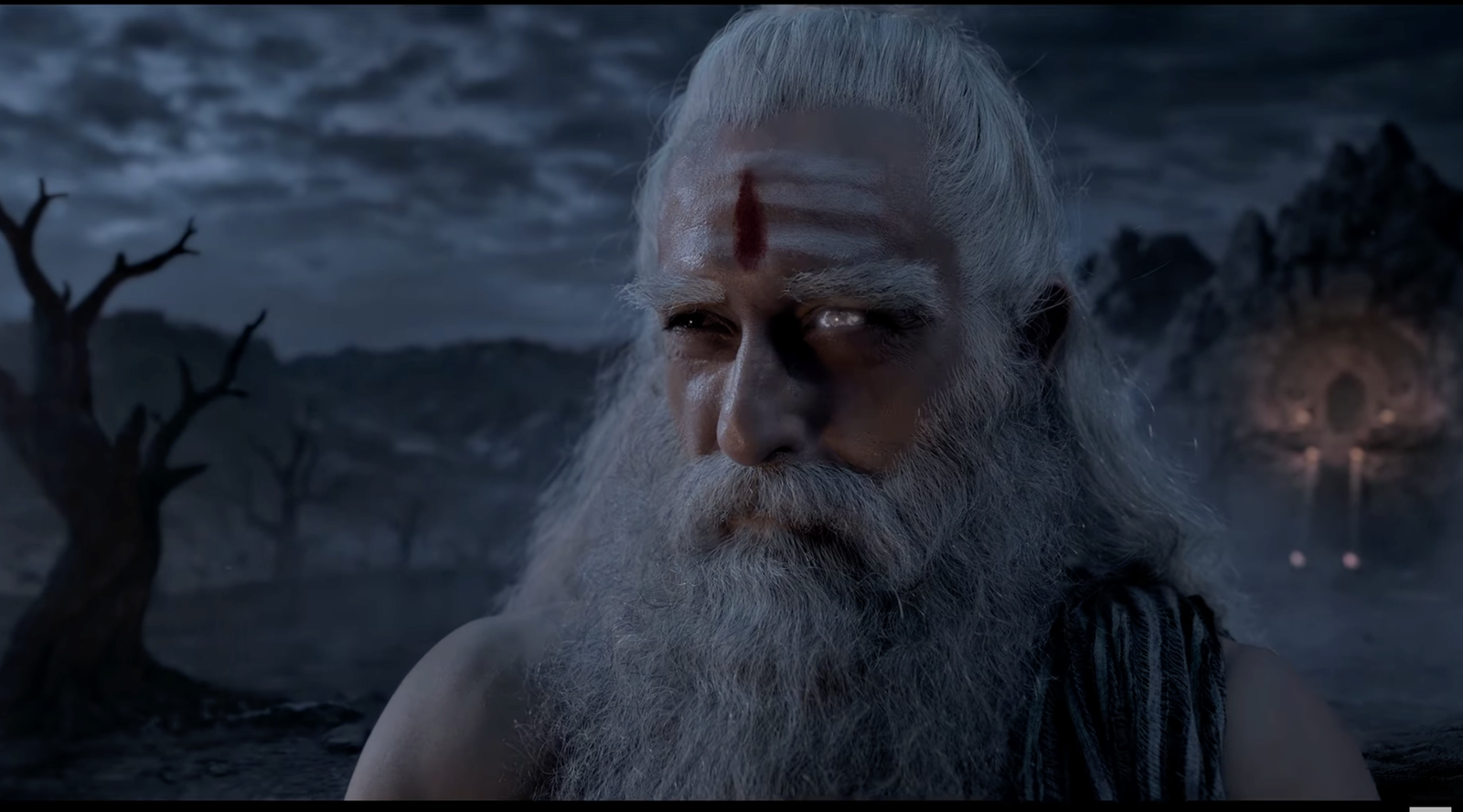
The Mahakali: Shukracharya's War Cry glimpse impresses with Akshaye Khanna's striking look and a powerful background score, but disappointing VFX and artificial digital backgrounds undermine its mythological grandeur.
There is something inherently fascinating about mythological cinema. When done right, it can transcend the limitations of spectacle and transport us into worlds that feel ancient, mystical and larger than life. But mythology also demands a certain visual conviction. The audience must believe in the world being created, and that belief can disappear almost instantly when the imagery on screen feels artificial. The glimpse of Mahakali: Shukracharya’s War Cry unfortunately finds itself caught precisely in that uncomfortable space between ambition and execution.
The first impression, however, is encouraging. Akshaye Khanna, as Shukracharya, looks striking. There is a gravitas to his appearance that immediately suggests a character with immense authority, wisdom and menace. The makeup and prosthetic work, combined with the costume design, have been thoughtfully conceived, and Khanna carries the look with the kind of stillness that only a seasoned performer can bring to a mythological character. He does not appear to be merely wearing a costume; he seems to inhabit the persona.
The background score is another definite strength. It gives the glimpse an appropriately mysterious and epic quality, creating an atmosphere that promises something grander beneath the surface. For those initial moments, Mahakali: Shukracharya’s War Cry appears to understand exactly what kind of cinematic world it wants to create. There is scale, there is darkness, and there is an attempt at an otherworldly aesthetic.
And then the visual effects arrive.
This is where the glimpse begins to lose its grip. The biggest problem is not that the VFX is merely imperfect; it is that it is conspicuously artificial. Several of the backgrounds and environments have the unmistakable appearance of green-screen work, and instead of disappearing into the mythology, the technology behind the imagery becomes painfully visible. You become aware of the compositing rather than the character, the digital backdrop rather than the world.
That is particularly damaging in a film that is attempting to sell grandeur. Mythological cinema requires the audience to surrender to its fantasy. If the digital environment looks flat, synthetic or poorly integrated, the suspension of disbelief becomes almost impossible. Akshaye Khanna may be delivering the right performance and the music may be doing its best to create an atmosphere, but neither can completely compensate for a visual world that does not feel tangible.
What makes the problem even more frustrating is the enormous technological advancement available to filmmakers today. Audiences have become accustomed to increasingly sophisticated visual imagery, not only in Hollywood but also in Indian cinema and even in content created using relatively accessible digital and AI tools. Against that backdrop, visuals that appear dated or undercooked stand out even more sharply. The issue is not necessarily the absence of a massive budget; it is whether the creative team has designed its ambition around the resources available to it.
That, ultimately, is the larger question raised by this glimpse. Ambition is admirable, but ambition without execution can become a liability. If a filmmaker wants to construct an enormous mythological universe, every department has to operate at the same level. Production design, cinematography, costumes, performances, music and VFX must exist in harmony. When one of those elements feels dramatically inferior to the others, the entire illusion begins to crack.
Akshaye Khanna’s Shukracharya, therefore, emerges as the most promising element of the glimpse. There is genuine curiosity around what the actor might do with such a character, particularly because Khanna possesses the restraint and intensity required for roles that depend as much on presence as dialogue. The look gives him a strong foundation, and the music enhances the sense of mystery surrounding him.
But cinema is ultimately a collective art form, and a powerful character cannot exist in isolation from the world around him. Mahakali: Shukracharya’s War Cry currently looks like a project whose visual ambition has outpaced its technical execution. There are flashes of something compelling here, but they are repeatedly interrupted by VFX that feels unconvincing and backgrounds that pull the viewer out of the experience.
One hopes the glimpse does not represent the final standard of the film and that the remaining post-production work significantly improves the visual effects and compositing. Because beneath the questionable digital execution, there is a potentially fascinating character, a strong central performance and an intriguing mythological premise.
For now, though, Mahakali: Shukracharya’s War Cry remains a mixed bag. Akshaye Khanna looks terrific, the musical atmosphere works, and the character design shows promise. But the visual effects are simply not convincing enough to make the world feel real. For a film attempting to create an epic mythological universe, that is not a minor flaw—it is the very foundation on which the entire cinematic illusion depends. As a glimpse, it is average, with the promise of something far better buried beneath its disappointing digital surface.