Physical Address
304 North Cardinal St.
Dorchester Center, MA 02124
Physical Address
304 North Cardinal St.
Dorchester Center, MA 02124

Bollywood news, reviews, interviews & fashion
Bollywood news, reviews, interviews & fashion
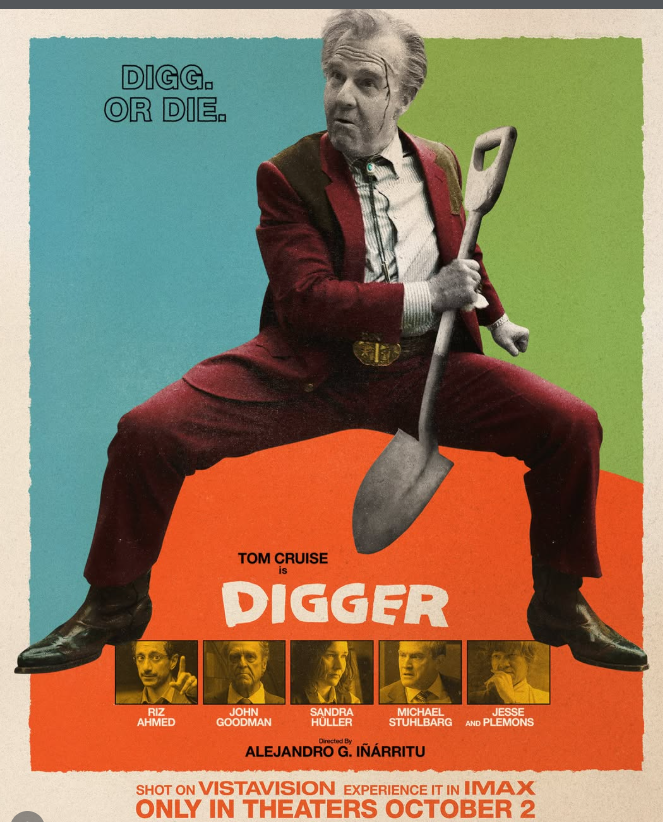
Tom Cruise's Digger opened to just $8 million Tom Cruise's Digger opened to just $8 million against a massive budget. From mismatched marketing and a divisive twist to weak overseas numbers, here is a critic's breakdown of why the Iñárritu film bombed.
Hollywood has its share of spectacular flops, but few have been as unexpected as this one. Digger paired Tom Cruise, one of the last true movie stars, with Alejandro G. Iñárritu, a director with Birdman and The Revenant on his résumé, under the banner of Warner Bros. It opened to roughly $8 million from 3,321 North American theatres and about $12 million from 73 international markets, a worldwide start of around $20 million. That is Cruise’s weakest debut since Lions for Lambs in 2007. The studio had hoped for $18-20 million, and analysts believe a film of this size needed something near $40 million. How did a film with this much talent end up here? The answer is a combination of arithmetic, positioning and perception.
The arithmetic is brutal. Reports of the production budget vary, from $125 million to between $160 million and $180 million, and the studio is said to have spent a further $100 million or so on marketing. Variety’s sources put the theatrical break-even at around $350 million worldwide, though a Warner Bros. spokesperson disputes that and says $300 million. Either way, the opening is nowhere near a trajectory that gets there, and some estimates suggest the film could lose between $150 million and $200 million. A film this expensive cannot afford to be an acquired taste, and Digger turned out to be exactly that.
The deeper problem is positioning. Cruise’s name on a poster promises a certain thing: precision, physical spectacle, a man hanging from something dangerous. Digger is none of those things. It is an absurdist dark comedy and a satire of billionaire power, in which Cruise disappears under prosthetics and a Southern drawl. It is a bold choice and I admire it, and as a critic I’d argue it is among the most daring turns of his career. But for the mass audience, the marketing had to bridge a gap between what Cruise normally sells and what Iñárritu actually made. The marketing campaign leaned heavily on Cruise’s cinematic legacy, which is a curious choice given that Iñárritu has described the film as a love letter to the young generation, many of whom weren’t alive when those blockbusters were in theatres. Fans of any age cannot be expected to buy a ticket merely because they loved his earlier hits. Older Cruise loyalists got a film they didn’t expect, and younger viewers were sold nostalgia they don’t share.
Then comes word of mouth, which in modern box office is destiny. The film holds a 51% on Rotten Tomatoes, 45 on Metacritic and a C+ CinemaScore from audiences, scores that signal polarisation at best and rejection at worst. Having seen the film, I understand why. In my own review I argued that the mid-film twist, which reveals the picture to be a film within a film with Cruise playing an actor playing Digger, drains the thriller’s tension too early, like learning mid-match that a gripping contest is only an exhibition. If a critic who admired the performances felt that deflation, imagine the ordinary ticket-buyer who came for a disaster thriller and found a meta-fictional satire. Disappointed audiences don’t recommend a film, and without recommendations, a $40 million opening is impossible and a $350 million run is fantasy.
The international picture compounds the damage. Cruise has long been among the most dependable stars overseas, and a weak $12 million from 73 markets suggests the film failed to travel. My own reading, and it is an inference rather than something the reports confirm, is that a satire built on American oil barons, presidents and media culture asks foreign audiences to bring a lot of context, and subtitled or dubbed comedy rarely lands as hard as spectacle. Spectacle sells everywhere. Satire, especially absurdist satire, often does not.
The competitive and market context also deserves a mention, not as an excuse but as a diagnosis. The overall domestic box office is up 19% over this point last year, so this was no sluggish market. Audiences were going to the cinema, and Verity opened to roughly $32 million that same weekend, with Brad Pitt’s survival drama Heart of the Beast holding well in its second. People simply chose other films. That is the cruelest finding of all: the audience was there, and Digger failed to claim it.
Finally, Digger belongs to a pattern. Warner Bros. has bet heavily on auteur-driven swings in recent years, and a majority of those expensive gambles, including Joker: Folie à Deux, Mickey 17 and The Bride!, lost the studio a great deal of money. The strategy is admirable in principle, because cinema needs filmmakers given room to take risks, but it works only when the budget matches the audience such a film can realistically reach. A $150 million-plus art-house provocation is a mismatch waiting to happen, however gifted the director and however bankable the star.
None of this erases what Cruise and Iñárritu have attempted. Performances, ambition and craft are not measured in opening weekends, and plenty of divisive films have been reappraised in time. Cruise will recover, as stars of his stature always do. But the lesson of Digger is a simple one: even the biggest movie star in the world cannot sell a film to people who don’t know what they’re buying. When the product, the marketing and the audience’s expectations point in three different directions, no amount of talent can close the gap.