Physical Address
304 North Cardinal St.
Dorchester Center, MA 02124
Physical Address
304 North Cardinal St.
Dorchester Center, MA 02124

Bollywood news, reviews, interviews & fashion
Bollywood news, reviews, interviews & fashion
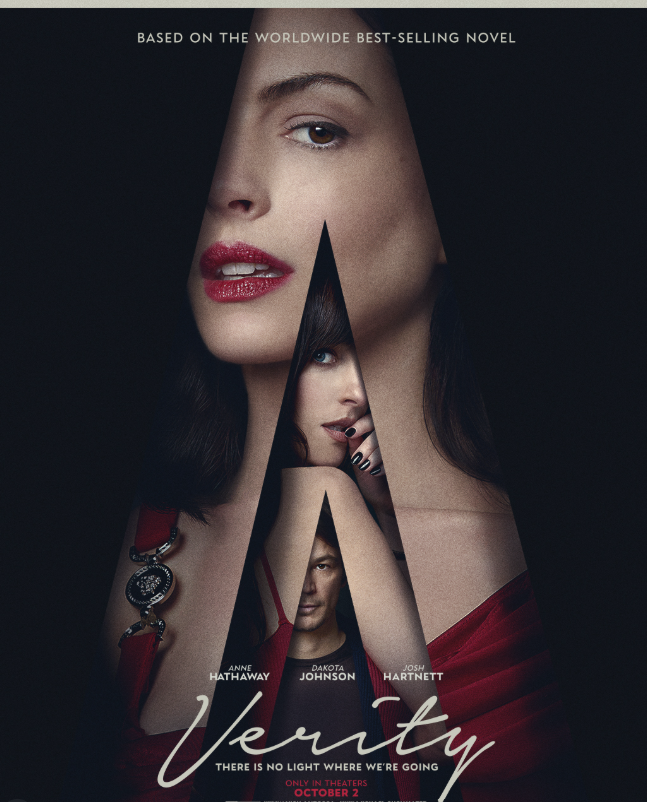
Anne Hathaway and Dakota Johnson's Verity is an average watch redeemed by a gripping climax with one genuine scare and an open ending. In India, the CBFC's cut to the Hathaway-Johnson intimate scene hurts the film.
A Colleen Hoover adaptation arrives with its audience pre-installed. Verity, her 2018 bestseller, was always the most film-ready of her books: a struggling writer, a famous author who cannot write, a husband who may or may not be hiding something, and a manuscript no one was meant to read. With Michael Showalter directing for Amazon MGM and Anne Hathaway, Dakota Johnson and Josh Hartnett in the leads, the ingredients for a slick, pulpy psychological thriller were all there. What reaches the screen is a film that is mostly average, redeemed by a finale that finally wakes up. In India, however, it is also a film that has been wounded by the censor’s scissors, and I will begin there, because it matters.
The Central Board of Film Certification passed the film on 29 September with an ‘A’ certificate, but not before ordering a 23-second trim. And much of it comes from the make-out sequence between Anne Hathaway and Dakota Johnson. The CBFC had no business doing this, and what makes it worse is that the film had already been rated for adults only. The ‘A’ certificate exists precisely so that mature content can be presented to mature audiences. Cutting a scene between two consenting adult characters after granting that rating isn’t protecting anyone. It is simply editorial interference by a body whose job is to classify films, not to rewrite them.
And the cut does real damage. The relationship between Lowen and Verity is the film’s engine, a pairing of attraction, rivalry and unease that the marketing promised and the scene delivered. Remove it, and you leave a visible seam, a jolt in the film’s emotional logic that makes the dynamic between the two women feel less charged and, frankly, less honest. Viewers who know what was cut will feel its absence, and those who don’t will sense that something is missing. A thriller depends on tension, and tension depends on desire and danger being allowed to coexist on screen. Trimming one half of that equation does not just ruin a scene. It undermines the whole film.
As for the film itself, the first two acts are, to put it plainly, an average watch. Dakota Johnson’s Lowen is hired to complete the remaining books in Verity Crawford’s successful series after a mysterious accident has left the author unable to write. She moves into the Crawford home, grows close to Jeremy, and begins to sense that something about the household is not right. It is a promising set-up, and Showalter stages it with competence, but competence is the problem. The pacing is leisurely, the dread arrives in familiar packaging, and the atmosphere never quite tips from glossy into genuinely unsettling. Johnson and Hartnett do solid work, and Hathaway is a magnetic presence whenever she is on screen, but the material does not push them beyond the expected. For long stretches, you find yourself waiting for the film to get on with it.
Then comes the climax, and the film transforms. There is one genuinely scary horror moment, a sequence that arrives with real shock, and it jolts the film out of its polite thriller routine and into something truly frightening. Everything that follows is gripping. The pace sharpens, the stakes finally feel real, and the performances catch fire. It is a reminder of what Verity could have been had its first two acts matched the intensity of its last. If you walk out of the theatre, it will be the finale you remember, and for a thriller that is not a small thing.
My one reservation about that ending is that it is open-ended, and your tolerance for that will determine your verdict. As a viewer, you leave not knowing what is true and what is false. Whose version of events do we believe? Which account is the lie? The film refuses to say, and I can see why this will frustrate some audiences, who will feel the ambiguity is a dodge. But I found it fitting for a story about a manuscript, an unreliable narrator and the dangerous seduction of a good story. It leaves you arguing with yourself in the car park, and that is perhaps the most a thriller can hope for.
The film also arrives to a mixed critical reception, but it is worth noting that audiences have responded: it opened to roughly $32 million domestically, outperforming Tom Cruise’s Digger over the same weekend. There is clearly an appetite for this kind of glossy, page-turning romantic thriller.
In the end, Verity is an average watch redeemed by its finale. It has a magnetic cast, a single memorable scare, and an ending that sends you home with a debate. It could have been far better, and in India it has certainly been made worse by a censor who cut what should never have been touched. Watch it for the last act, and for the performances, and spare a thought for the version of the film that Indian audiences were not allowed to see.