Physical Address
304 North Cardinal St.
Dorchester Center, MA 02124
Physical Address
304 North Cardinal St.
Dorchester Center, MA 02124

Bollywood news, reviews, interviews & fashion
Bollywood news, reviews, interviews & fashion
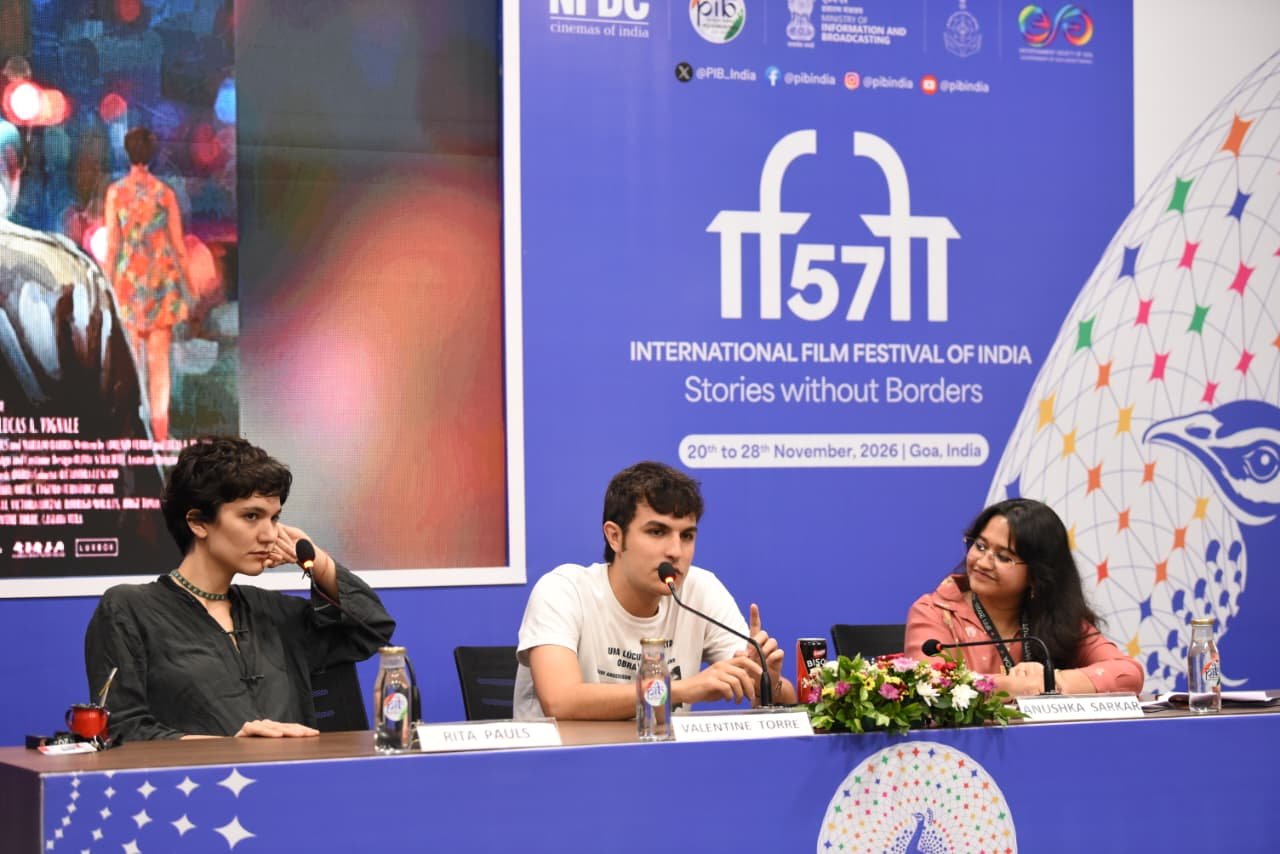
Argentine film The River Train (El Tren Fluvial), which premiered at IFFI 2026, explores childhood dreams, freedom and friendship through the journey of a nine-year-old boy.
The Spanish-language film, which premiered in India at the 57th International Film Festival of India, tells the story of a young boy’s journey of self-discovery.
The 57th International Film Festival of India (IFFI) in Goa witnessed an interesting discussion around the Argentine film The River Train (El Tren Fluvial), as its team opened up about the film’s emotional core, creative journey and the collaborative spirit behind its making.
At a press conference held on November 27, producer Valentine Torre and actor Rita Pauls, who plays the Professor in the film, spoke about how trust, friendship and sensitivity played an important role in bringing the project to life.
Directed by Lorenzo Ferro and Lucas A. Vignale, the 75-minute Spanish-language feature had its India premiere in the International Competition section of IFFI 2026.
Set against the backdrop of Argentina’s Pampas region, The River Train follows nine-year-old Milo, a young boy who trains in Malambo, a traditional Argentine folk dance.
However, Milo dreams of travelling by train to Buenos Aires, a city he has only experienced through the movies. When he eventually ventures out on his own, he encounters unfamiliar situations, loneliness and experiences that gradually introduce him to a world beyond the boundaries he has always known.
At its heart, the film explores childhood, freedom, independence and the universal desire to discover the unknown while pursuing one’s dreams.
Speaking about the film’s origins, producer Valentine Torre revealed that the project began as a casual invitation among friends to make a small film. What started as a modest undertaking eventually developed into a feature film, thanks to the collective efforts and mutual trust of the team.
The film subsequently travelled to international festivals, including Berlin, San Sebastián and Buenos Aires, reaching audiences beyond Argentina.
Actor Rita Pauls also spoke about her experience of working with young actor Milo Barría, who plays the central character. Barría, a Malambo dancer with no prior acting experience, became an important part of the film’s creative process.
According to Pauls, the crew consciously adapted its working methods to accommodate the young actor’s needs and moods rather than expecting him to adjust to the conventional demands of a film set. This sensitivity helped keep the child at the centre of the filmmaking experience.
The film also stands out for its distinctive visual treatment. Explaining the creative decisions behind the cinematography, Torre revealed that the directors opted for a 4:3 aspect ratio, inspired by their admiration for classic cinema.
The format also helped the team work within the film’s production budget. Certain portions of the film feature black-and-white imagery, lending the narrative an old-world cinematic atmosphere and a dreamlike quality.
Looking ahead, Torre revealed that the team plans to begin shooting Plan de fuga, a road film revolving around two brothers, in 2027.
He also spoke about The River Train‘s recent theatrical release in Spain and expressed hope for future filmmaking collaborations with India.
Moderated by Anushka Sarkar, the IFFI press conference offered a glimpse into how a film that began as a small collaborative effort evolved into an internationally showcased feature.
Through Milo’s journey, The River Train explores the courage to step beyond familiar surroundings and discover one’s own identity. Its filmmaking journey also highlights how empathy, friendship and collective creative effort can shape meaningful cinema