Physical Address
304 North Cardinal St.
Dorchester Center, MA 02124
Physical Address
304 North Cardinal St.
Dorchester Center, MA 02124

Bollywood news, reviews, interviews & fashion
Bollywood news, reviews, interviews & fashion
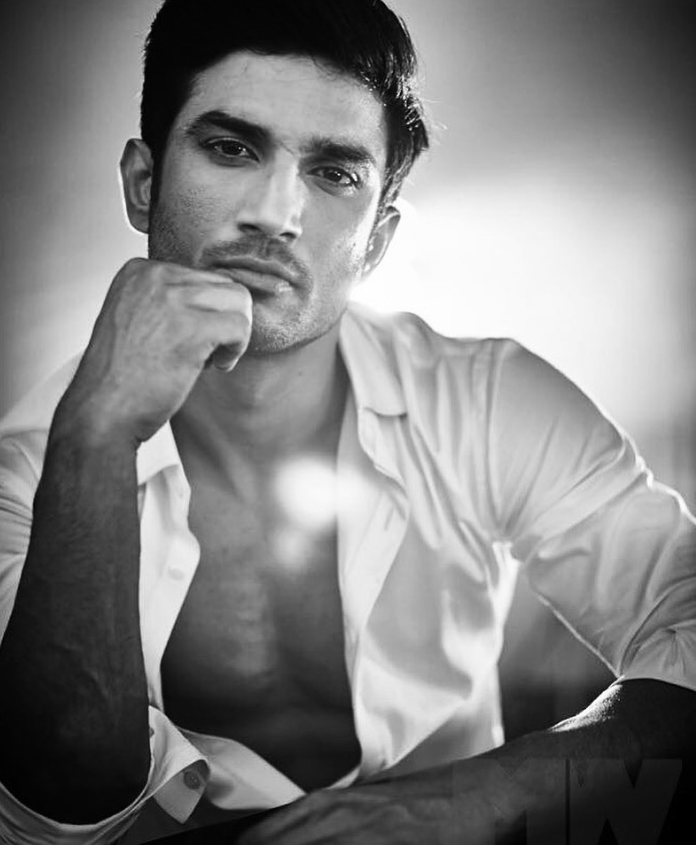
Six years later, the dimples are still there on screen, the telescope still points at the moon, and a generation still cannot quite explain why they tear up when his films come on. A tribute to Sushant Singh Rajput — the boy who touched the stars.
There is a particular kind of grief that cinema leaves behind — not the grief of losing a loved one you could call or hold, but the grief of losing someone whose eyes you knew, whose laugh you recognised, whose silences you had learned to read across a darkened hall. It is quieter than ordinary grief, and somehow more persistent. Six years have passed since the world woke up to news that broke something in the chest of an entire generation, and still — still — there are mornings when a song from Kai Po Che! comes on, and the hands go still, and the breath gets a little short.
Sushant Singh Rajput was not just an actor. He was a feeling.
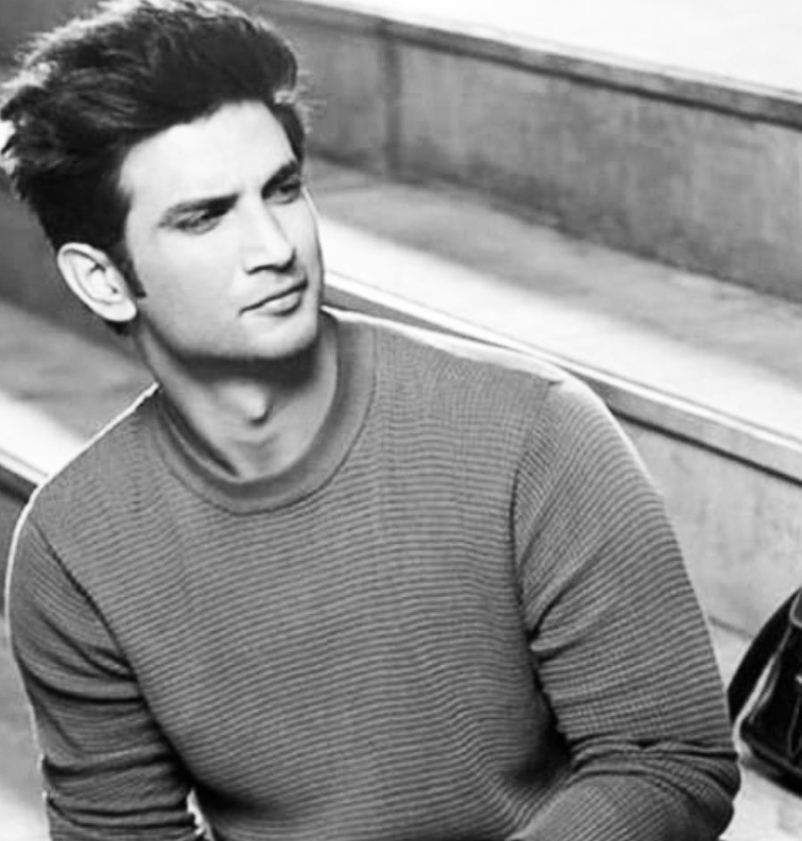
He arrived in Mumbai the way most dreamers do — carrying more hope than luggage, more hunger than certainty. A National Olympiad topper in Physics from Delhi, a student of Mechanical Engineering at DCE, a boy whose mind was wired for the stars long before he ever played one on screen. He dropped out of college to chase theatre, joining Shiamak Davar’s dance troupe, performing in background at award shows, learning the grammar of performance from the ground up.
There was nothing handed to him. No godfather. No family connection. No shortcut through the velvet ropes of an industry that can be extraordinarily cruel to outsiders.
What he had was this: an almost dangerous level of belief. In himself. In the dream. In the idea that if you were good enough, if you worked hard enough, the world would eventually have no choice but to see you.
The world saw him.
When Pavitra Rishta put his face on television sets across the country, something shifted in the living rooms of middle-class India. Here was a leading man who didn’t look like he’d been assembled in a factory. He had dimples that appeared and disappeared like a secret. He had eyes that seemed to be perpetually in the middle of a thought. He was — and this word is used rarely and carefully — real.
But it was Kai Po Che! that announced to serious cinema that Sushant Singh Rajput was not a television actor trying his luck in films. He was the film. As Ishaan Bhatt — impulsive, passionate, tragically idealistic — he gave us a performance of such unguarded vulnerability that you forgot you were watching a movie. You were watching a man you knew. A friend. A brother. Someone from your own mohalla who believed a little too hard and paid for it.
Then came Abhishek Kapoor’s gift to him, and his gift back to us — MS Dhoni: The Untold Story.
To play a legend while the legend still lives, still breathes, still holds records — that is an act of extraordinary courage. To play Mahendra Singh Dhoni and make audiences forget Dhoni for two and a half hours, replacing him with your own flesh and blood and performance — that is something else entirely. Sushant didn’t impersonate Dhoni. He inhabited him. The helicopter shot of that six in the 2011 World Cup final is permanently tattooed on the retina of Indian cinema, but in that moment in the theatre, tears were not shed for cricket. They were shed for a boy from Ranchi who refused to let the world define his ceiling.
And then Chhichhore. The film that felt, in hindsight, like a message in a bottle. Losers are not those who fail. Losers are those who are afraid to try. Sushant said those words on screen with a grin that held everything — warmth, mischief, hard-won wisdom. It won the National Award. He was not alive to hold it.
This is what the obituaries often miss, what the news cycles could never fully capture: Sushant Singh Rajput was genuinely, profoundly curious about the universe.
He owned a NASA-certified telescope. He could explain the curvature of spacetime at a dinner table. He was reading Vedic philosophy and quantum physics simultaneously, trying to find the place where they shook hands. His Instagram was peppered with photographs of the moon — not the instagram moon of aesthetic accounts, but his moon, photographed with the care of a man who looked up and felt something that most of us have forgotten to feel.
He once said in an interview that his dream was to own land on the moon. He said it not as a boast, not as celebrity eccentricity, but with the earnestness of a schoolboy who had never quite stopped believing that all of science was really just a love letter to the infinite.
He made a bucket list. Forty items. He ticked off most of them. He learned to fly a plane. He went skydiving. He trained at the Jharkhand state cricket academy for that role that would define a generation. He painted. He danced. He read voraciously — Fyodor Dostoevsky in one hand, Yuval Noah Harari in the other.
He was trying to live every life he could fit into one.
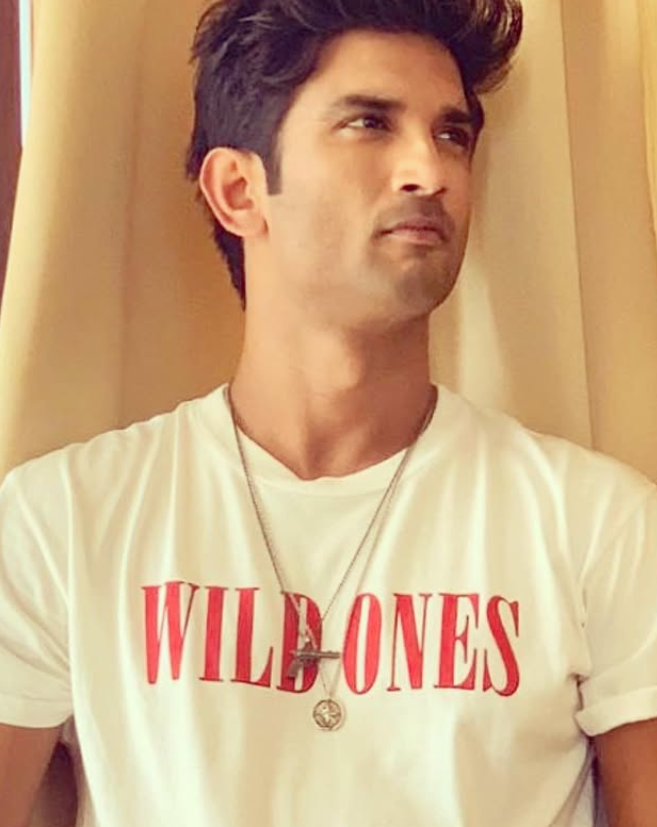
History will be both harsh and fair about what surrounded this man’s final years. The debates that erupted after his death — about insider-outsider divides, about the invisible walls of an industry that rewards bloodlines over brilliance, about the loneliness that can exist even inside fame — these were not invented by grief. They were given voice by it.
Sushant Singh Rajput navigated an industry that did not always know what to do with someone like him. Too intellectual for the conventional hero mould. Too unconventional for the rom-com machine. Too real, perhaps, for a world that often preferred its stars to be surfaces.
And yet, even as he fought battles that no press release would acknowledge, he gave us Dil Bechara — his final gift, an adaptation of The Fault in Our Stars, in which he played Manny with such incandescent joy, such unself-conscious sweetness, that the film felt less like a performance and more like a farewell note written in sunlight. The last image of him on screen — dancing, laughing, fully, recklessly alive — is the image that should be kept.
Six years.
His filmography is frozen, and yet it keeps living. Kai Po Che! still makes twenty-four-year-olds cry in a way they cannot fully explain. MS Dhoni is still the film that fathers watch with sons who are beginning to understand what ambition costs. Chhichhore still plays at college screenings where students who were twelve when he died are now encountering him for the first time and wondering, who was this man?
The answer is: he was one of us. Except he was better at being one of us than we will ever be.
He was the boy who studied the stars and then became one — briefly, brilliantly, in the way that the brightest things often burn.
Somewhere in his telescope’s memory is the last photograph he took of the moon. I like to think it was taken on a clear night, with the kind of stillness that only comes when the rest of the world is asleep and it is just you and the infinite, and you remember that the distance between here and there is only as large as you’re willing to believe it is.
Kai po che, Sushant. You flew the kite higher than any of us.