Physical Address
304 North Cardinal St.
Dorchester Center, MA 02124
Physical Address
304 North Cardinal St.
Dorchester Center, MA 02124

Bollywood news, reviews, interviews & fashion
Bollywood news, reviews, interviews & fashion
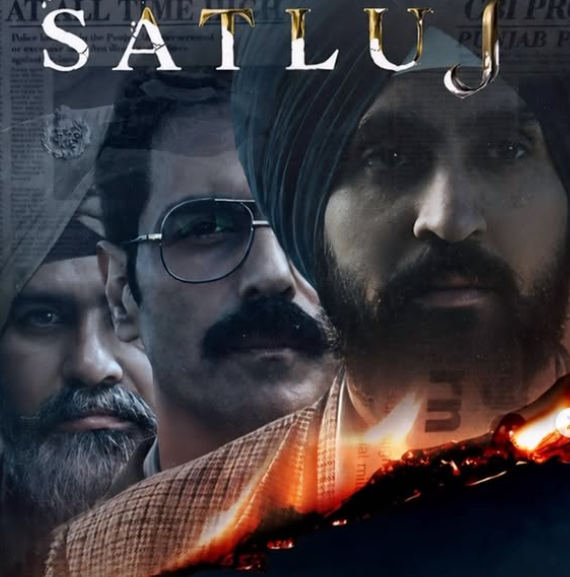
The Satluj ban has exposed a brutal truth for Bollywood: films on controversial subjects face years of censor cuts, blocked theatrical releases, OTT takedowns, and rampant piracy. From Punjab '95's 127-cut ordeal to Udta Punjab and Padmaavat, here's why controversial cinema has become an uninvestable venture — and what the industry loses by accepting it.
There is a moment in the life of every film that its makers dream about: the release. For Honey Trehan’s Satluj — the film that began life as Ghallughara, became Punjab ’95, and finally limped onto ZEE5 under a third name on July 3, 2026 — that moment lasted roughly forty-eight hours. By the evening of July 5, the film had been pulled from the platform’s Indian catalogue “until further notice,” with the Information and Broadcasting Ministry alleging it had been released without completing the required certification process under the IT Rules, 2021. Within a day, pirated copies were circulating on Telegram channels and torrent sites, and ZEE5 was reduced to pleading with audiences not to watch the very film it could no longer show them.
If you are a producer sitting in Andheri looking at this sequence of events, there is only one rational conclusion to draw, and it is an uncomfortable one for anyone who loves cinema: the controversial political film, as a category of commercial enterprise in India today, is broken. What follows is the case — the hard-nosed, spreadsheet-first case — that a trade analyst or a studio CFO would make for why Bollywood should simply stop making them. It is a case worth stating in full, precisely because it is so persuasive, before we ask what is lost by accepting it.
Consider what Satluj actually endured. The film, starring Diljit Dosanjh as the human rights activist Jaswant Singh Khalra — who investigated thousands of alleged illegal cremations during Punjab’s militancy years and himself disappeared after being taken into police custody in 1995 — was completed and submitted to the CBFC in 2022. What began as a list of 21 modification points reportedly ballooned into demands for as many as 127 cuts. The board asked for the title to be changed. According to the director, it asked at various points for the removal of references to Khalra himself — the film’s subject — and even objected to the use of the word “desh.” Trehan has recounted that senior officials suggested to producer Ronnie Screwvala that he simply “write off this film.”
Then came the international humiliation: a confirmed world premiere slot at the Toronto International Film Festival in September 2023, withdrawn. Then the abandonment of theatrical release altogether. Then, after nearly four years, the quiet OTT release under a neutered title — Dosanjh insisted the cut itself was untouched — followed by removal from the Indian market in two days. The film remains streamable abroad on ZEE5 Global. In India, the only people watching it are pirates and their customers.
Four years. Three titles. Zero rupees of theatrical revenue in its home market. This is not a distribution strategy; it is a war of attrition that the filmmaker cannot win, because the other side controls the clock, and in film financing, the clock is money.
The commercial logic here is brutal and rarely spelled out. A mid-budget Hindi film carries production and marketing costs typically financed against a release timeline. Every month of delay accrues interest on borrowed capital, erodes the marketability of the cast’s current stardom, and pushes the film further from the news cycle that made it topical. India’s film history is a ledger of these losses.
Udta Punjab (2016) faced a demand for 89 cuts — including, absurdly, the removal of the word “Punjab” — and had to fight its way through the Bombay High Court, which cleared it with a single cut. The producers won the legal battle, but a full print leaked online two days before release, cannibalising its opening. Black Friday, Anurag Kashyap’s masterful reconstruction of the 1993 Bombay blasts, sat completed for roughly three years before its 2007 release while courts deliberated. Padmaavat (2018) was delayed by months of violent protests; sets were vandalised, its director assaulted during shooting, effigies burned, and even after clearance several states saw theatres refuse to screen it out of fear — meaning that a CBFC certificate, hard-won, did not even guarantee exhibition. Go back further and the pattern is older than the multiplex: Aandhi (1975) was pulled during the Emergency; Kissa Kursi Ka had its prints infamously destroyed; Bandit Queen and Fire fought their own protracted battles in the 1990s.
The point a producer draws from this history is not that these films were bad bets artistically — several are landmarks — but that the variance is intolerable. A horror comedy has a predictable risk profile. A film touching Punjab’s militancy years, Kashmir, communal violence, or a sitting political establishment has a risk profile that includes: unbounded certification delay, litigation costs, festival withdrawals, exhibitor cold feet, state-level bans, and now — the Satluj innovation — post-release takedown from streaming itself.
For half a decade, the industry consoled itself with a workaround: if theatres are impossible, there is always streaming. That consolation is now gone, and it is worth understanding why.
The IT Rules, 2021 brought OTT platforms under a grievance and oversight framework answerable to the I&B Ministry. The chilling effect arrived almost immediately: Tandav (2021) drew FIRs across multiple states within days of release, and Amazon Prime Video apologised and voluntarily cut scenes — a first for a major global streamer in India. Platforms internalised the lesson. Scripts dealing with religion, recent political history, or the security state began dying in development inside the streamers’ own standards-and-practices departments, which is the most invisible form of censorship there is: the film that is never greenlit generates no headlines.
Satluj is the proof of concept for the final closure of the loophole. A film denied a viable theatrical path released directly to a national platform — uncut, its makers said — and the state’s response was to have it removed within the weekend, citing the certification it had spent four years being unable to obtain. The circularity is exquisite: you cannot stream without the certificate you cannot get. Meanwhile, films like The Kashmir Files and The Kerala Story — politically charged in a different direction — sailed through certification and remain on the same platform, a comparison Trehan himself has made pointedly. Whatever one thinks of that asymmetry, the producer’s takeaway is the same: the rules are not the rules; the risk is not calculable; and uncalculable risk is uninvestable risk.
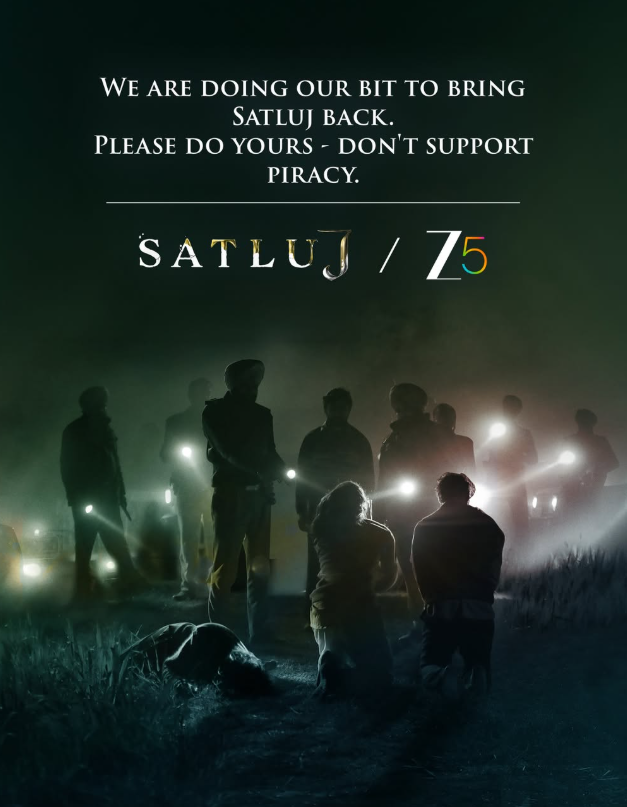
Here is the cruellest part of the equation. The stated purpose of certification is to protect audiences. The actual outcome of the Satluj affair is that Indian audiences watched the film anyway — on pirated streams of degraded quality, through channels that pay nothing to the artists, technicians, and financiers who made it. Within a day of the takedown, pirated copies had gone viral, and the platform was publicly begging viewers to abstain.
This is the pattern every time. The film is not un-watched; it is un-monetised. The producer absorbs a total loss while the audience absorbs a compromised viewing experience, and the only economic beneficiaries are piracy networks. From a pure policy standpoint, a ban in the streaming era does not suppress a film; it merely transfers its entire economic value from its makers to thieves. A producer contemplating a controversial subject must now price in not only the possibility of never releasing, but the certainty that if the film is any good and gets banned, it will be consumed for free.
So runs the case for avoidance, and stated this way it is close to airtight: unbounded delay, escalating cuts, exhibitor fear, a closed OTT hatch, and piracy as the residual claimant. The rational producer funds another franchise sequel and sleeps well.
And yet a critic and historian is obliged to say what the spreadsheet cannot. First, the commercial case is not as closed as it appears. Diljit Dosanjh emerged from this ordeal with his moral stature enhanced, not diminished — this is an artist coming off record-breaking global tours, and his association with Khalra’s story has deepened, not damaged, his brand. International markets, festivals, and global streaming rights are real revenue lines; Satluj is still playing to the diaspora on ZEE5 Global. Courts have repeatedly sided with filmmakers — Udta Punjab‘s near-total vindication in the Bombay High Court remains the precedent — and public sympathy in the Satluj case has flowed overwhelmingly toward the film, with political leaders across party lines questioning the takedown.
Second, and more fundamentally: the argument “avoid controversy because the system punishes it” is not a neutral business observation. It is the chilling effect, described from the inside. If producers accept it, the censorship regime never needs to ban anything again; the industry will pre-ban itself in the development meeting. Indian cinema’s most enduring works — Garm Hava, Aakrosh, Black Friday, Court — exist because someone declined the rational calculation. Jaswant Singh Khalra’s own story is about a man who kept counting bodies when every incentive said to stop. A film industry that concludes his story is too expensive to tell has not merely made a business decision. It has answered, in the negative, the question of what cinema is for.
The honest position, then, is this: the producer who avoids controversial subjects in the aftermath of Satluj is behaving rationally within a broken system. But the fact that avoidance is rational is the strongest possible indictment of the system — not a vindication of the avoidance.