Physical Address
304 North Cardinal St.
Dorchester Center, MA 02124
Physical Address
304 North Cardinal St.
Dorchester Center, MA 02124

Bollywood news, reviews, interviews & fashion
Bollywood news, reviews, interviews & fashion

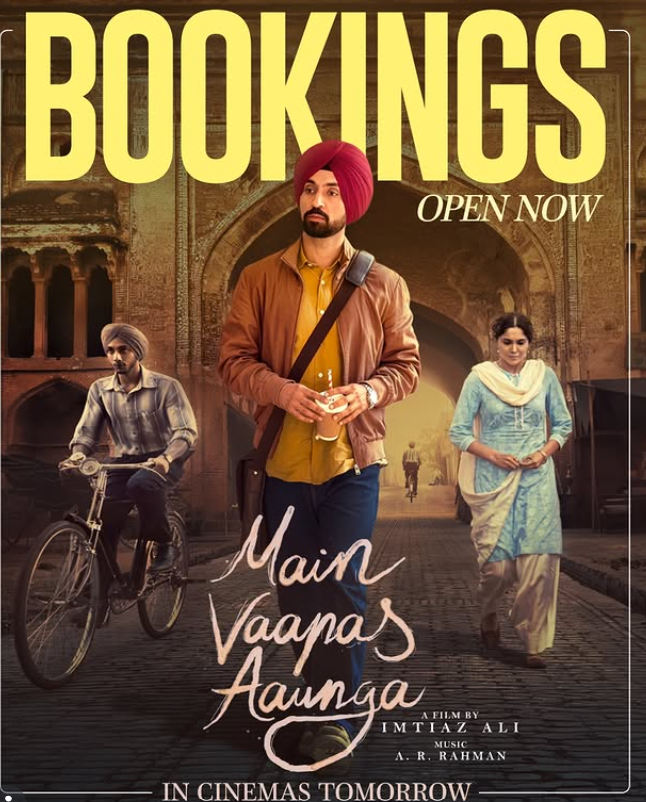
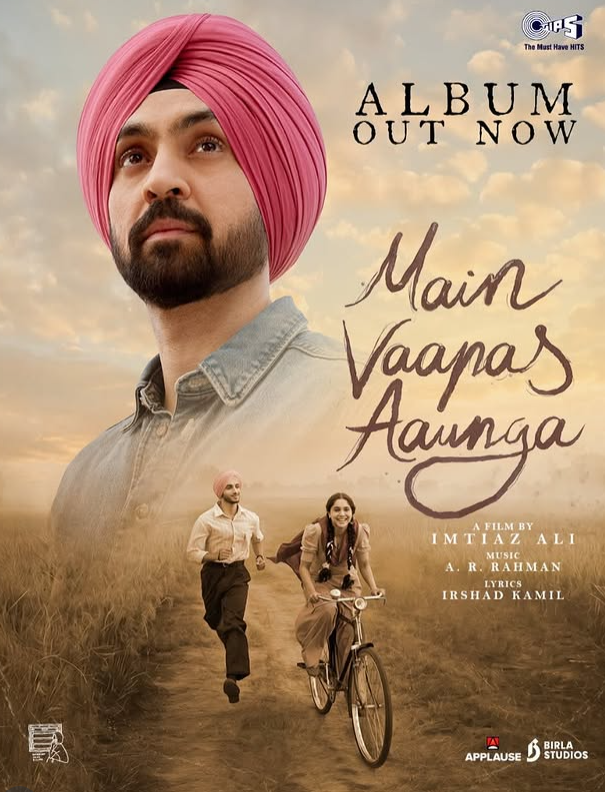
After six years away from theatres and the wreckage of Love Aaj Kal (2020), Imtiaz Ali returns this Friday with Main Vaapas Aaunga — a Partition-era love story starring Diljit Dosanjh, with music by A.R. Rahman and Naseeruddin Shah as its anchor. We weigh everything going for the film, everything that could sink it, and why this comeback matters not just for Imtiaz but for the future of the Hindi romantic drama itself.
There is a particular kind of heartbreak reserved for watching your favourite filmmaker lose the plot. Not in a single, spectacular implosion — those are almost easier to forgive — but in a slow, aching drift away from everything that once made them extraordinary. That is what Imtiaz Ali’s last theatrical outing, the 2020 wreckage called Love Aaj Kal, felt like. Not a disaster born of arrogance, but something sadder: a genuinely gifted storyteller who had stopped listening to the world and started repeating himself into incoherence.
On June 12, 2026, Imtiaz Ali returns to the big screen with Main Vaapas Aaunga — and the question isn’t just whether it will work commercially. The question is whether the man who gave us Jab We Met, Rockstar, and Highway still exists. Whether there is still fire in that particular hearth. Diljit Dosanjh, A.R. Rahman, Irshad Kamil, a Partition-era love story spanning generations — on paper, this is the most Imtiaz Ali film Imtiaz Ali has made in a very long time. But Bollywood’s graveyard is full of “on papers.”
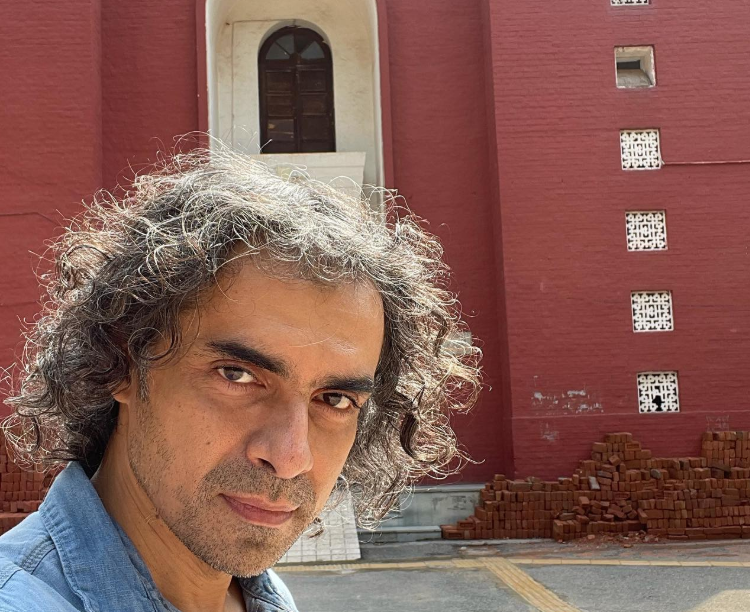
Let’s not flinch from the wound. Love Aaj Kal (2020) wasn’t just a box office failure — it was a reputational collapse. A film made with a budget of ₹50 crore that limped to approximately ₹52 crore worldwide, barely recovering its costs before the world went into lockdown and erased whatever second-week mercy the universe might have offered. Critics were merciless: Anna Vetticad gave it 0.01/5 and called it “godawfully boring.” Anupama Chopra wrote that it “missed the mark by a mile.” The Rotten Tomatoes Tomatometer sat at a bruising 20%.
But numbers alone don’t capture what that film cost Imtiaz. The real damage was spiritual. Love Aaj Kal exposed a filmmaker who had become self-derivative — a man recreating the aesthetic of his own hits without recovering their soul. The parallel-timeline structure that worked in the 2009 original became a narrative crutch that collapsed under the weight of characters nobody cared about. Kartik Aaryan, whatever his considerable charisma, was miscast at the altar of contemporary star-chasing. Sara Ali Khan was left stranded in scenes that asked her to emote in a vacuum. The result was a film that felt like a cover version of a song the artist himself had written — technically recognisable, emotionally hollow.
And then came the retreat. Since Love Aaj Kal, Imtiaz Ali has lived almost entirely on OTT — creating the shows She and Dr Arora for Netflix, and directing the critically acclaimed Amar Singh Chamkila in 2024, also on Netflix. Chamkila was magnificent in many ways — Diljit Dosanjh and Parineeti Chopra gave career-best performances, and the film reminded everyone that Imtiaz at his best is a poet in celluloid. But it was a streaming release. It did not require the brutal accountability of the Friday morning report. It did not ask him to prove himself where reputations are actually made and broken — in cinemas, across India, in front of a paying audience with zero obligation to be kind.
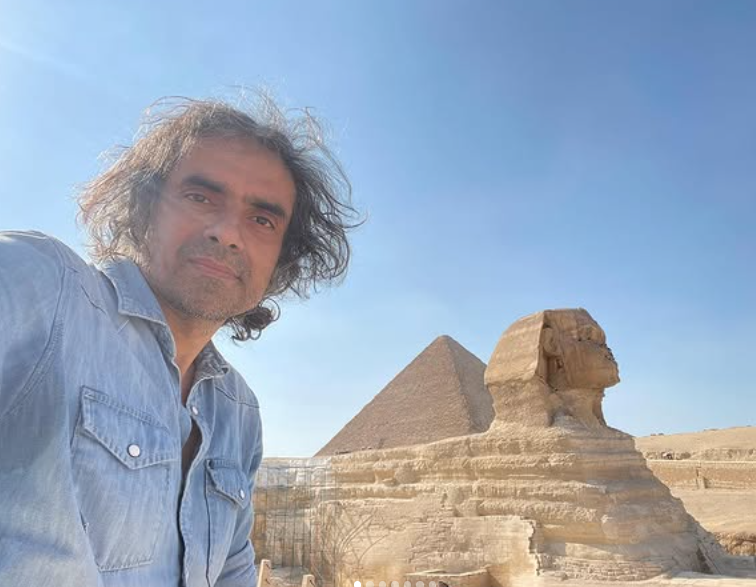
Main Vaapas Aaunga is the reckoning that has been deferred for six years. And here is the thing about reckonings — they are equally capable of revelation and destruction.
There is a larger argument to be made here. Imtiaz Ali represents a school of Hindi filmmaking that is genuinely endangered: the emotionally literate, character-driven, musically soulful romantic drama. In a post-pandemic Bollywood landscape that has been convulsed by the rise of action spectaculars, mass entertainers, and the unrelenting tyranny of the “pan-India film,” quieter films about the human heart have struggled to justify their theatrical existence.
Ae Dil Hai Mushkil underperformed. Tamasha was divisive. Ae Watan Mere Watan went straight to streaming. The audience that once made Rockstar a cult phenomenon has aged, fragmented, and partially migrated to their couches. If Main Vaapas Aaunga fails, it will not merely be Imtiaz Ali’s second consecutive theatrical disaster — it will be read as evidence that this entire genre of filmmaking no longer has a theatrical life. The studios will use it as ammunition. Streaming platforms will smile.
Conversely, if it works, it becomes a proof of concept: that love stories rooted in emotional complexity, with landmark music and literary ambition, can still move audiences to fill cinema halls. The stakes, in other words, extend far beyond one director’s career.
Let us be fair to what the film has going for it, because there is quite a lot.
Diljit Dosanjh at Peak Cultural Power. This is not the Diljit of 2024 — already a phenomenon — but the Diljit of 2026, a man who screened the Main Vaapas Aaunga trailer to thousands of roaring fans during his AURA World Tour in Toronto and received the kind of reception usually reserved for rock gods. Diljit is the most genuinely loved entertainer in India right now, cutting across age groups, regions, and sensibilities in a way that very few stars manage. His 2024 collaboration with Imtiaz in Chamkila produced what many consider his finest screen performance. The reunion carries real emotional logic: these two understand each other, and that understanding produces work of a different calibre. A star of Diljit’s current magnitude dragging audiences into theatres for a Partition romance is not a small thing.
The Holy Trinity Returns. A.R. Rahman, Imtiaz Ali, and Irshad Kamil have a body of work together — Rockstar, Highway, Tamasha — that constitutes some of the most celebrated music in 21st-century Hindi cinema. When this collaboration fires, it doesn’t merely produce good songs; it produces emotional architecture. Early evidence from Main Vaapas Aaunga suggests the magic is intact. The song “Vo Nahin,” featuring a Budapest Scoring Orchestra, has already been described as a deeply melancholic, epic-scale composition. “Kya Kamaal Hai” and “Maskara” have built momentum. If the full album delivers, it will drive footfalls in ways that no marketing campaign can replicate — Rahman’s music has historically worked as its own theatrical distribution mechanism.
Partition as Untapped Emotional Territory. The story — a love preserved in someone’s heart for 78 years after the Partition of India — is territory that Hindi cinema has barely scratched. Pinjar, Gadar, 1947 Earth: most Partition films have been about violence, displacement, and geopolitical tragedy. Imtiaz Ali is explicitly positioning Main Vaapas Aaunga not as a political film but as a personal one — about what remains in human memory long after the history books have moved on. His own description is arresting: “What is the love that we carried in our hearts when we crossed the river of time?” That is the kind of question that, if answered cinematically with even half the poetry it contains in language, could produce something genuinely extraordinary.
Naseeruddin Shah as the Anchor. The trailer suggests that Shah plays an older version of Diljit Dosanjh’s character — the 78-year-old still carrying that love. If this framing is accurate, the film has a structural trump card: one of the greatest actors alive, in material that is designed for exactly his kind of quiet devastation. Shah’s mere presence signals that this is a film with literary seriousness. It changes the conversation.
A Chastened, Listening Imtiaz. The director has been refreshingly honest about what went wrong with Love Aaj Kal. He has said publicly that he “tried to put too much into it.” He has spoken of how, for Main Vaapas Aaunga, he wrote less and listened more — drawing from real accounts of Partition survivors rather than from his own narrative instincts. That is a filmmaker who has done the internal work. Whether that translates to the screen remains to be seen, but the self-awareness is encouraging.
Early Reactions Are Genuinely Warm. Ektaa Kapoor, after attending a special screening, wrote that she “couldn’t get over the film” for an entire day. She called the music “pure magic” and praised the emotional depth. These are early days, and industry praise must always be received with appropriate skepticism — Bollywood is a town where nobody ever says a film is bad before it releases. But the quality of the praise — the specificity, the willingness to articulate what moved them — suggests something more than promotional courtesy.
Honesty demands equal time for the concerns. And there are real ones.
The Buzz Problem. Industry observers have noted, with some unease, that the theatrical chatter for Main Vaapas Aaunga has remained “cautious, not explosive.” For a film releasing this Friday with a star of Diljit’s magnitude and Rahman’s music, the advance booking numbers and social media heat should arguably be louder. This is not a film that appears to have broken through to casual moviegoers — the people who fill halls on Friday evening without doing extensive research. It feels, so far, like a film for the converted.
The Runtime Question. Main Vaapas Aaunga runs 2 hours and 47 minutes. In 2026, in a multiplex economy where attention spans are under constant siege from streaming platforms, nearly three hours is a significant ask for a romantic drama. Imtiaz Ali’s films have historically had pacing issues in their second halves — Tamasha famously divided audiences at precisely the point where it asked them to invest more deeply. A nearly three-hour Partition love story will need to earn every minute of that runtime with a discipline that has not always been Imtiaz’s strongest suit.
The Partition Romanticisation Risk. Several commentators have already raised a legitimate concern: that Imtiaz Ali’s characteristically aestheticised approach to pain might end up softening what was one of the bloodiest events in human history. Partition killed between two hundred thousand and two million people. Families were annihilated, women were subjected to mass violence, entire communities were erased. A film that foregrounds the “tenderness of early youth and romance” against this backdrop runs a genuine risk of creating a beautiful lie — gorgeous and emotionally manipulative in equal measure. If the film does not find a way to honour the horror as well as the love, it risks a critical backlash that no amount of good music can absorb.
Vedang Raina’s Theatrical Credibility. His 2024 debut, Jigra opposite Alia Bhatt, was a box office disaster. He now arrives at the most important film of his young career without the cushion of a single theatrical success. He is likeable and has genuine presence, but his casting as the romantic lead in the past-era track places enormous pressure on a performer who is still establishing his theatrical identity. If his chemistry with Sharvari doesn’t convince, the historical thread of the film — arguably its emotional spine — could feel underpowered.
The Genre Headwind. Let’s be cold about this: the last several Hindi romantic dramas that attempted emotional complexity at a theatrical scale have underperformed. The audience has been trained by a decade of blockbuster storytelling to expect spectacle with their sentiment. Main Vaapas Aaunga is, by all indications, a film of internal landscapes rather than external action. That is a harder sell in 2026 than it was in 2013, and no amount of wishing otherwise will change the mathematics of opening weekend.
The Competition. Releasing the same day as Kangana Ranaut’s Bharat Bhhagya Viddhaata, Manoj Bajpayee’s Governor, and Vikram Bhatt’s Haunted 3D is an odd choice for a film that needs meditative, undistracted space. Imtiaz may have announced first, but multiplex screens don’t care about announcement dates — they care about occupancy. The crowded release weekend could fragment exactly the audience Main Vaapas Aaunga most needs.
Cinema, finally, is not accountable to analysis. Imtiaz Ali has made films that look bulletproof on paper and crumbled (Love Aaj Kal 2020), and films that seemed like commercial non-starters and became cultural touchstones (Highway). What Main Vaapas Aaunga appears to have — and this is the most honest reading of all available evidence — is the raw material of something significant. The question is whether it has been shaped with sufficient rigour, restraint, and cinematic intelligence to realise that potential.
What is undeniable is this: Imtiaz Ali needs this. Hindi cinema needs this. And if the man who once made Ranbir Kapoor howl “Jo bhi main” into the Kashmiri night, who made Alia Bhatt run across highways, who made Shahid Kapoor disco-dance through existential dread — if that man has truly returned to the building, then Main Vaapas Aaunga will not merely be a comeback.
It will be a homecoming.
And those, as any Imtiaz Ali film will tell you, are the most devastating kind.
Main Vaapas Aaunga releases in cinemas on June 12, 2026.