Physical Address
304 North Cardinal St.
Dorchester Center, MA 02124
Physical Address
304 North Cardinal St.
Dorchester Center, MA 02124

Bollywood news, reviews, interviews & fashion
Bollywood news, reviews, interviews & fashion
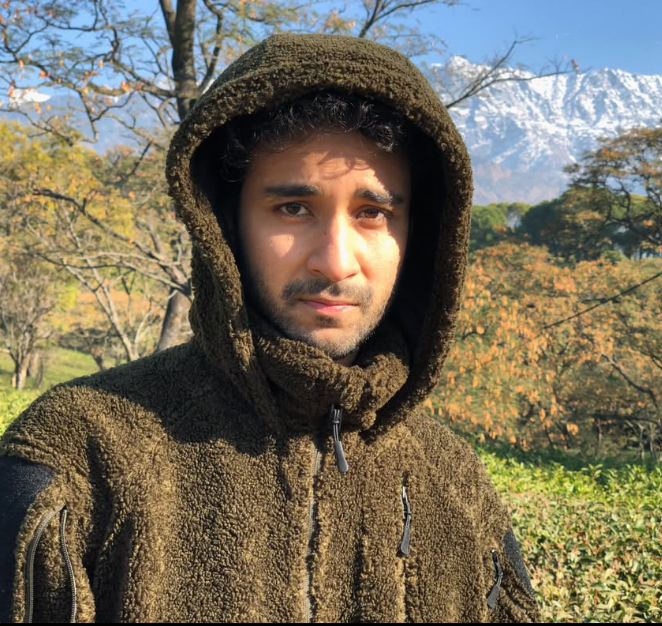
Raghav Juyal is one of the finest talents of his generation. So why was he sitting on a comedy panel absorbing insults days before his release? A scathing look at Bollywood's most self-defeating promotion strategy — and the Alpha precedent nobody learned from.
Three days before Bhai Tera Star Hai opens in theatres, its leading man sat on a panel and got told, to his face, in front of a paying audience, that he had to keep announcing his own film because nobody else would. That was the joke. That was the promotion. And somewhere in a production office, a marketing team presumably checked “youth outreach” off a spreadsheet and went home satisfied.
Let us be clear about who is not the problem here. Raghav Juyal is one of the most genuinely gifted performers of his generation — a dancer whose slow-motion artistry made him a household name before he ever faced a film camera, and an actor whose turn in Kill announced a screen presence that most star kids spend three launches failing to manufacture. He was magnetic, dangerous, unforgettable. That is not a man who needs to sit on a comedy panel absorbing jibes for engagement metrics. That is a man whose work should be doing the talking.
Instead, on the members-only bonus episode of India’s Got Latent that dropped on July 27, the talking was done at his expense. When Raghav mentioned his film’s title — as any actor promoting a release is there to do — host Samay Raina shot back asking how many times he’d have to announce it himself, with a dig at what kind of “star” that made him. When Raghav gamely deflected by pointing out that Alia Bhatt had also come on the show to promote her own film, Raina delivered the kill shot: her film didn’t work either.
Read that again. An actor came on a show to promote his release, and left having been publicly reminded — days before opening — that the last star who tried this exact strategy on this exact show delivered a flop. If a rival studio had scripted the exchange, they could not have done better.
And here is the part that should keep every PR professional in Bombay awake at night: we have already run this experiment. Alia Bhatt and Sharvari were the very first guests of India’s Got Latent Season 2, deployed to give Alpha that elusive “Gen Z connect.” The clips went viral. The engagement was enormous. The internet declared Alia “sporting” and “humble.”
And then Alpha — a Rs 130 crore YRF Spy Universe tentpole — limped to roughly Rs 100 crore worldwide and was declared a failure. All those views, all that banter, all that carefully manufactured relatability converted into an opening-day occupancy of barely 20 per cent. The very host who now jokes about Alpha‘s fate had himself booked out a theatre and handed out free tickets for it. Even that didn’t move the needle. If a full-throated endorsement from the show’s own star, plus a premiere-episode appearance, could not push one ticket-buying Gen Z viewer off his couch, what precisely does the industry believe a roasting will achieve?
The uncomfortable truth the spreadsheets refuse to record: virality is not footfall. A 19-year-old who watches a two-minute clip of a star being humiliated has consumed the content. The transaction is complete. He has no remaining reason to spend Rs 300 and three hours on the film — the appearance didn’t sell the film, it sold the clip. And the clip belongs to the show, not the movie.
None of this should surprise anyone who has actually watched India’s Got Latent rather than merely tracked its numbers. Insulting the guest is not an occasional excess of the format — it is the format. The comedy is engineered to flow from the panel’s humiliation as much as the contestants’ acts. Season 1’s history is littered with moments the show itself had to scrub — a chair-throwing meltdown, remarks about disabled people, and ultimately a controversy severe enough that the entire show was pulled off air in early 2025.
This is the platform to which studios are now couriering their leading actors, days before release, in the hope of borrowed cool. It is the promotional equivalent of walking into a wood-chipper and expecting a haircut. The host wins either way: if the star is witty, the show gets a great episode; if the star is wounded, the show gets a viral clip. The star wins never. There is no version of “the celebrated actor got owned on a comedy show” that ends with a family of four booking weekend tickets.
And it is simply not funny in the way its defenders claim. A roast between equals, with consent and craft, is a comedic tradition. What this is, increasingly, is a power game dressed as banter — where the guest has a release riding on goodwill and cannot afford to push back, and the host, who risks nothing, mines that helplessness for laughs. Raghav, ever the professional, smiled through it. He should never have been put in a position where smiling through it was the job.
The deeper indictment is of the PR apparatus that keeps making this booking. Bollywood’s marketing class has convinced itself that Gen Z is a vending machine: insert “authentic unfiltered content,” receive ticket sales. It has not noticed that this generation’s entire relationship with content is free. They will watch the podcast, the reel, the roast, the leak — and then watch the film’s best scenes in 40-second clips a week after release. Reaching them where they are is not the same as moving them to where you need them: a ticket counter.
What actually sells tickets has not changed: a trailer that promises an experience the phone cannot replicate, word of mouth, and the accumulated equity of an artist’s work. Kill did not need Raghav to be roasted anywhere; it needed audiences to hear it was unlike anything Hindi cinema had made. That is the currency he has earned. Spending it on a members-only episode where the headline takeaway is a joke about a flop — while the film opens against a Spider-Man tentpole, no less — is not strategy. It is surrender dressed as savvy.
Raghav Juyal has the talent to become a star. His team should stop treating him like a punchline before he gets there.