Physical Address
304 North Cardinal St.
Dorchester Center, MA 02124
Physical Address
304 North Cardinal St.
Dorchester Center, MA 02124

Bollywood news, reviews, interviews & fashion
Bollywood news, reviews, interviews & fashion
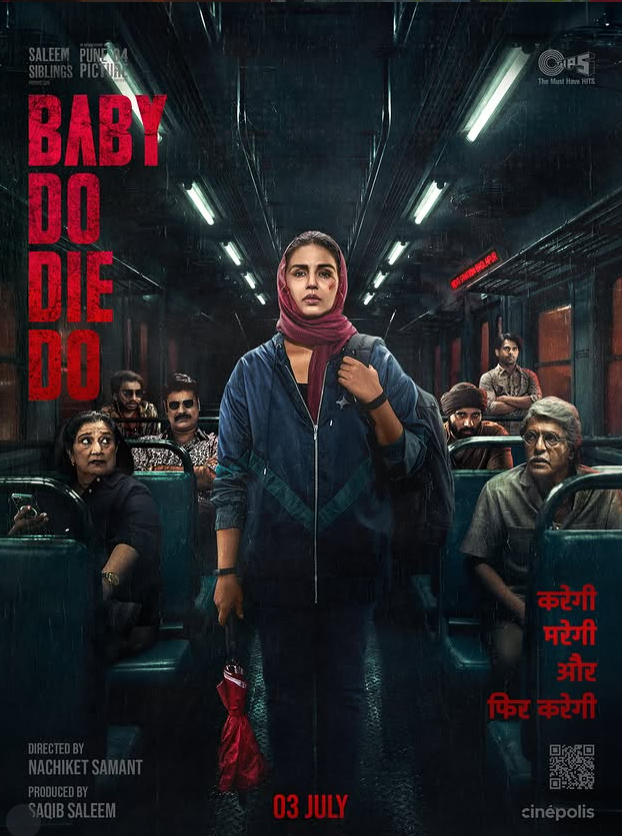
Baby Do Die Do boasts an intriguing premise, a talented cast led by Huma Qureshi, and a few effective twists, but inconsistent writing, underwhelming action, and a lack of sustained tension prevent it from becoming the gripping thriller it aspires to be. Read Bollywoodwallah's detailed review.
Rating: ★★☆☆☆ (2/5)
Cinema often thrives on irresistible ideas. Sometimes, a single premise is enough to ignite curiosity long before the first frame appears on screen. Baby Do Die Do arrives with one such premise—a woman leading a double life as a contract killer. It’s the kind of concept that promises razor-sharp tension, morally ambiguous characters, and edge-of-the-seat storytelling. Unfortunately, while the idea is loaded with cinematic possibilities, the execution never fully embraces them.
Rather than evolving into the stylish, nerve-wracking thriller it so desperately wants to be, Baby Do Die Do settles into the comfort zone of an average OTT drama—watchable in parts, intermittently engaging, but rarely electrifying. It is less a disastrous film than a frustrating one because the flashes of brilliance constantly remind you of the superior film that could have existed.
The greatest disappointment lies not in what Baby Do Die Do is, but in what it could have been. The screenplay is built around an inherently fascinating premise, and to its credit, it throws in a couple of genuinely effective twists that briefly inject life into the narrative. Those moments hint at a darker, smarter, more gripping thriller lurking beneath the surface. But every time the film appears ready to accelerate, it inexplicably eases off the throttle.
Suspense is created only to dissipate moments later. Emotional stakes are introduced but rarely explored. Instead of tightening its grip with every passing scene, the film repeatedly allows tension to slip through its fingers. A thriller should leave the audience leaning forward in anticipation. Baby Do Die Do often leaves them simply waiting for something bigger to happen.
Perhaps the film’s most glaring weakness is its inability to capitalize on an immensely talented ensemble. Chunky Panday, Sikandar Kher, and Seema Pahwa enter the story with characters that instantly spark curiosity. Their body language, dialogue delivery, and screen presence suggest hidden layers waiting to unfold. Yet those layers never arrive. Each actor seems poised for a defining moment that never materialises. Watching these performances is like watching an explosive T20 innings that ends after a handful of boundaries. The promise is unmistakable. The payoff never comes.
The screenplay repeatedly introduces compelling personalities but abandons them before they have the opportunity to leave a lasting impression. In a film populated by actors capable of extraordinary work, this feels like an avoidable creative failure.
Huma Qureshi has long established herself as one of the industry’s most dependable performers—an actor capable of combining vulnerability with quiet intensity. Here, however, the script places unnecessary restraints on her. She plays the role with complete sincerity, but the screenplay never gifts her the defining sequence that transforms a performance into a memorable one. The character remains emotionally underwritten, denying Huma the opportunity to fully inhabit the psychological complexities of a professional assassin. A hitwoman should radiate danger, unpredictability and authority. Instead, the character often feels strangely subdued, not because Huma lacks conviction, but because the writing rarely allows her to unleash it. It is a reminder that even exceptional actors cannot compensate indefinitely for material that refuses to challenge them.
Action is not merely choreography—it is storytelling through movement. For a film revolving around a contract killer, every confrontation should feel immediate, visceral and pulse-pounding. Instead, Baby Do Die Do repeatedly keeps the audience at arm’s length.
One of the film’s most important action sequences unfolds inside a parking lot—a setting ripe for claustrophobic tension and inventive staging. Rather than allowing viewers to experience the confrontation firsthand, the film presents significant portions of it through CCTV footage. The creative decision drains the scene of urgency. Instead of placing the audience inside the action, the film turns them into detached observers watching events unfold from a security monitor. It is an artistic choice that diminishes what should have been one of the film’s defining moments.
If the screenplay often disappoints, several actors ensure the film never completely loses its footing. Rachit delivers an assured and emotionally convincing performance, bringing authenticity whenever he appears. Marudhar Shekhawat emerges as one of the film’s biggest surprises. His work during the second half is particularly impressive, adding weight and credibility to scenes that desperately need dramatic momentum. Despite limited screen time, Kailash Waghmare also leaves a positive impression, making the most of every moment the screenplay affords him.
Their performances become reminders that the film possesses far more acting talent than it ultimately knows how to utilise.
The final act should have been the moment where every narrative thread tightened into an unforgettable crescendo. Instead, the climax feels surprisingly muted. The emotional payoff lacks force, the tension never reaches the heights promised by the premise, and the resolution arrives without the catharsis audiences seek after investing in a thriller. When the credits finally roll, the dominant emotion isn’t disappointment alone—it’s frustration. Frustration because the film repeatedly demonstrates flashes of intelligence and imagination before retreating into familiar territory.
Baby Do Die Do is the very definition of a missed opportunity. It possesses an arresting premise, an accomplished cast, and occasional flashes of inspired writing. There are moments that genuinely intrigue, performances that deserve applause, and twists that momentarily reignite interest. But a compelling concept alone cannot sustain a thriller. Without sustained tension, emotionally satisfying character arcs, impactful action, and a climax worthy of its premise, the film ultimately settles for mediocrity when it could have aimed for excellence. This is not an irredeemable film. It is, perhaps, a more frustrating one—a film that constantly reminds you how much better it might have been. Sometimes, the greatest disappointment in cinema isn’t watching a bad film. It’s watching a good idea slowly slip away.
Bollywoodwallah Rating: ★★☆☆☆ (2/5)